Navigating Multicollinearity: Understanding Condition Index and VIF in Research

As you embark on the final stages of your research thesis project, it’s crucial to navigate the intricate terrain of statistical analysis with clarity and precision. Among the many challenges that researchers encounter, multicollinearity stands out as a formidable foe, capable of casting shadows of doubt on the reliability of regression results.
Multicollinearity, simply put, refers to the situation where predictor variables in a regression model are highly correlated with each other. This correlation can muddy the waters of interpretation, making it difficult to disentangle the unique effects of individual predictors on the outcome variable. It’s akin to trying to discern the distinct flavors in a complex stew where the ingredients blend seamlessly into each other.
To shed light on this phenomenon, researchers often turn to diagnostic tools like Condition Index and VIF (Variance Inflation Factor). These metrics serve as compasses in the foggy landscape of multicollinearity, providing valuable insights into its magnitude and implications.
The Condition Index serves as an initial litmus test, offering a numerical gauge of the severity of multicollinearity within your model. A higher Condition Index value raises a red flag, signaling a greater degree of multicollinearity among the predictor variables. However, it stops short of pinpointing the exact variables responsible for this tangled web of correlation.
Enter the Variance Inflation Factor (VIF), a more granular measure that delves deeper into the tangled threads of multicollinearity. With VIF, researchers can assess the inflation in the variances of regression coefficients attributable to multicollinearity. A high VIF value acts as a warning signal, suggesting that the estimates of regression coefficients are swathed in uncertainty due to the presence of multicollinearity.
Understanding these concepts is akin to equipping yourself with a sturdy compass and map as you traverse the statistical terrain of regression analysis. Armed with knowledge of Condition Index and VIF, you can navigate the treacherous waters of multicollinearity with confidence, ensuring that your research thesis project stands on solid ground.
Unveiling Statistical Diagnostic Plots: Interpreting Data Insights
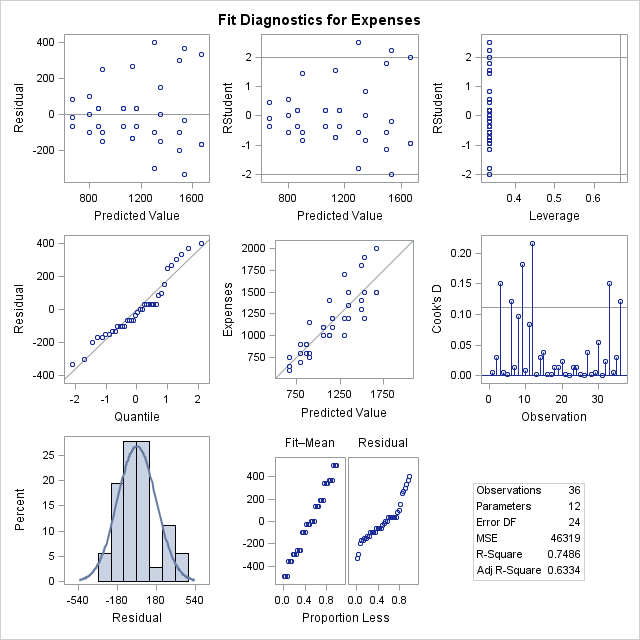
Statistical diagnostic plots are like maps in the realm of data analysis, guiding analysts through the terrain of datasets with clarity and precision. Just as a skilled cartographer deciphers geographic features to reveal hidden treasures, these diagnostic plots unveil insights into data quality, distribution characteristics, and potential anomalies. From the symmetrical bell curve of a mesokurtic histogram to the outlier-detecting whiskers of a box plot, each plot tells a story about the data it represents. Join us on a journey as we explore the visual narratives woven by these essential tools of data exploration and interpretation.
Demystifying the Difference Between One-Sample and Paired-Sample T-Tests

nlocking Statistical Insights: The Difference Between One-Sample and Paired-Sample T-Tests
As researchers and scholars, we often find ourselves grappling with complex statistical concepts in our quest for knowledge and understanding. Two such concepts, the one-sample t-test and the paired-sample t-test, serve as pillars of hypothesis testing in research methodology. But what sets them apart? Let’s explore.
One-Sample T-Test: This statistical test allows us to compare the mean of a single sample to a known population mean or a hypothesized value. It’s akin to asking, “Does our sample differ significantly from a predetermined benchmark?”
Paired-Sample T-Test: In contrast, the paired-sample t-test evaluates the difference between the means of two related groups or conditions. By analyzing paired observations, often collected before and after an intervention, we ascertain whether there’s a significant change over time or under varying conditions.
Understanding the nuances between these tests empowers us to make informed decisions in our research endeavors, guiding us toward meaningful discoveries and scholarly contributions.
Mastering Statistics: Your Guide to Postgraduate Tutoring in Statistical Analysis

Securing funding for your research project is crucial for postgraduate researchers. Our grant proposal writing services are designed to help you craft compelling proposals that effectively communicate the significance of your research and maximize your chances of success. With our expert assistance, you can navigate the grant writing process with confidence and unlock funding opportunities to propel your research forward.
Unraveling the Data Puzzle: How Professional Analysis Can Elevate Your Dissertation

Embarking on the journey of writing a dissertation is both exciting and challenging. Our professional data analysis assistance services are designed to help you unravel the complexities of data analysis and elevate the quality of your dissertation. With our expert guidance, you can navigate statistical analysis with confidence and ensure that your research findings are accurate, reliable, and impactful.